Tuesday, July 9, 2019

men's health audience blog tasks

Men's Health - Audience blog tasks

Read the Men's Health Media Pack in full to get a good idea of the demographics and psychographics for the Men's Health target audience then answer the following questions:

1) How does the magazine introduce itself?
Men’s Health is the biggest-selling men’s lifestyle magazine, both in the UK and worldwide.
It’s success is built on a winning editorial formula which combines visually-engaging health, well being and
nutrition features with premium content covering fashion, grooming, watches, tech and travel.

2) What does the introduction suggest about the representation of masculinity in Men's Health's?

It suggests that masculinity is represented  in a very  strong and dominant wya.

3) How do the print statistics for Men's Health compare to GQ and Esquire?

They have the biggest circualtaion than all the other maagzines.
4) What is the difference between circulation and readership?

circulation is actual number of the magazines and readership is how many people have read the magazines.

5) What was the circulation of Men's Health in thousands at the time this Media Pack was published? What about the readership for ABC1 men? AB men? [Note: this Media Pack was published in 2016 and some of the figures have fallen since then. Up to date circulation figures can be found at the top of this blog post].

  • Circulation: 180,000
  • Readership (ABC1 men): 643,000
  • Readership (AB men): 321,000
6) How do readers generally interact with the digital version of the magazine?

by making websites.

7) How many people do Men's Health reach across social media platforms?

  • Facebook 944K 
  • Twitter 285K 
  • Instagram 66K 

8) What is the audience profile for Men's Health readers? 

peoepl who are educated and have earn about 700k.

9) What is the Men's Health fashion philosophy? How much do Men's Health readers collectively spend on fashion?

they spent about1.1 billion on fashion.

10) What is the average watch collection value for the Men's Health audience? What do the statistics about watches suggest about the Men's Health audience demographics and psychographics?  

average watch colll;ection-£4,127

11) What percentage of Men's Health readers use moisturiser daily? What does this suggest about Men's Health readers' view of masculinity?

73% readers.

12) What does the media pack suggest regarding the Men's Health audience for fitness and technology?

It suggests that £238 million on sportswear

13) Men's Health luxe is a series of magazines distributed with Men's Health targeting a specific aspect of the Men's Health audience. What are these three brand extension magazines called and what do they cover?


  • urban active
  • synchrosied
  • epicure


14) What do the Men's Health luxe magazines suggest about the demographics and psychographics of the Men's Health audience?

Idemographics-16 and above
pyschographics-aspirers lavish lifestyle

15) What additional brand extensions do Men's Health offer?

survival of the fittest is the biggest series.

16) What are the global statistics for Men's Health?

  • International editions: 37
  • Countries published: 60
  • Global circulation: 4.5 million
  • Global readership: 26.7
  • Websites: 25
  • Uniques: 23.7 million
  • Social Media Footprint: 19.3 million
17) What does the 2017 calendar editorial specials suggest about the Men's Health audience?

HE suggested that people are being self consciousness.

18) What audience pleasures are offered by the magazine?

knowledge whcih can help men with their health.

19) What lifestyle and job would you expect the average Men's Health reader to have?

To  be into banking,accounting or someone who is successful.]

20) Why do you think Men's Health has managed to (just) remain profitable when many other magazines have struggled due to the rise of digital media?

This is because men are more conscious about their heath and want to have muscles in order to look good.

men's health Industries

Magazines: Industries & Men's Health

To explore the Industries context for Men's Health we need to study Hearst publishing and look at the impact of digital media on the print magazine industry.

This means interrogating why the internet has had such a devastating effect on certain print brands and why some other magazines are continuing to thrive in the digital age. We also need to spend some time on the Men's Health website and consider the similarities and differences to what we've found in the print version of the magazine.

Notes from the lessons

Men's Health UK is published by Hearst Publishing UK, a subsidiary of Hearst Communications.

Hearst Communications is an American media conglomerate based in New York that is over 130 years old and is still owned by the Hearst family.

It owns a range of media and business information brands including American newspapers, magazines (e.g. Cosmopolitan), half of the A&E Network TV channel and 20% of US sports broadcaster ESPN.

It employs 20,000 people and its 2016 revenue was $10.8 billion.

Hearst Publishing UK

Hearst UK publishes over 20 magazine titles including Men’s Health, Cosmopolitan, Elle, Esquire, Good Housekeeping, Inside Soap and more.

Hearst UK brands reach 30% of UK women and 25% of UK men. They sell over 4m magazines a month and have 17m UK digital unique users.

Hearst UK has also diversified into events and other licensed brand extensions (e.g. Esquire Townhouse pop up members club, Country Living sofas and Men’s Health home gym equipment).


The impact of digital media on the magazine industry

Some key questions:
  • Why has digital media (the internet) had such a devasting effect on the magazines industry?
  • When did YOU last buy a magazine?
  • Who IS buying magazines?

Suggestions for SWOT analysis of the impact of digital media on magazines:
  • Strengths: Magazine brands are well established to diversify online, audiences already know and like them.
  • Weaknesses: Print publishers do not have the expertise or knowledge of digital – it is a very different medium.
  • Opportunities: Magazines can find new audiences online.
  • Threats: Audiences will stop buying paper products and expect everything online for free.

Digital media has had a devastating effect on the print magazines industry. 
  • Print sales fell by 42% from 23.8m to 13.9m between 2010 and 2017. 
  • Back in 2000, sales were over 30m – signalling a 55% decline in just 17 years.
  • Advertising in consumer magazines has fallen from £512m in 2010 to £250m in 2017. 
  • Google and Facebook now dominate online advertising (they account for 65% of the UK digital ad market).
As a result of these changes, many magazines have closed.

Digital media: Hearst and Men’s Health

Hearst UK has posted losses in recent years due to the decline in the magazines market.

Men’s Health has also declined in recent years from a circulation high of 228,000 in 2008 to 146,000 now. However, it has moved up and down in recent years (dropping to 160,000 in 2016 before going up to 180,000 in 2018) which shows decline is not necessarily inevitable.


Men's Health - Industries case study blog tasks

This is a comprehensive case study covering a range of Industry contexts. It is divided into three sections: Hearst publishing, the impact of digital media and Men's Health online platforms. You will need to allow for at least two hours to work through the following tasks.

Hearst publishing

Research Hearst publishing by looking at the Hearst UK website and the Wikipedia entry for parent company and conglomerate Hearst Communications.

1) Hearst UK is part of Hearst Communications. What is Hearst Communications and where is it based?

HEARST is an American mass media and business information conglomerate based in New York City.[

2) What media industries and brands make up the Hearst Communications conglomerate?

Hearst owns newspapers, magazines, television channels, and television stations, including the San Francisco Chronicle, the Houston Chronicle, Cosmopolitan and Esquire. It owns 50% of the A&E Networks cable network group and 20% of the sports cable network group ESPN, both in partnership with The Walt Disney Company

3) What was the global revenue for Hearst Communications (in dollars) for the most recent year on record?

10.8 BILLION US$

4) Focusing on Hearst UK, what other magazine brands are part of Hearst UK publishing? How many UK people do they reach in print and online?

MALE 25%
WOMAN-30%

Read this Campaign interview with Hearst UK CEO James Wildman.

5) What is James Wildman's plan for Hearst UK?

His aim is to grow share in print to stem decline, accelerate growth in digital, diversify revenues through events and partnerships, and look at acquisitions

6) What percentage ad decline are consumer magazines facing?

when consumer magazines are facing ad declines of more than 10% this year, money is flowing to Google and Facebook, and online influencers are chipping away at print brands


7) What Wildman think about premium content and paywalls?

hearst needs to charge for premimum content.

8) How has Hearst used diversification to grow the business?

Hearst runs about 100 events a year and he plans to focus on fewer, bigger events such as Esquire Town House. Merchandising deals such as a Country Living range of sofas with DFS have been a money-spinner

Read this Hearst UK press release for their late 2018 ABC figures.

9) Is Men's Health increasing or decreasing in circulation?

it is decreasing as people don't read magazibnes anymore.

10) What does the press release say about recent successes associated with Men's Health?

They say that  they are targeting a new audience.

The impact of digital media on the print magazines industry

Read this BBC website feature on the print magazine industry and then this Guardian feature on the demise of NME magazine and print magazines in general.

1) Why are traditional print magazines struggling?

This si because of the technology as everyone wants to read and wtch in their phones.

2) What genre of magazines is currently bucking the trend and increasing sales? Why is this?

political magazines because of the breexit as people ae concerned about it.

3) In contrast, what magazine genres are struggling? Give examples of magazines that have declined or stopped printing altogether.

gossip and enetrtainment.

4) Look at the Guardian article in detail. What statistics are provided to demonstrate the decline in the print magazines industry between 2010 and 2017? What about the percentage decline from 2000?

£512 million to £250 million in 2017.

5) What percentage of ad revenue is taken by Google and Facebook?

65%

6) What strategies can magazine publishers use to remain in business in the digital age?

make apps for their comp[anies which can interest the people in digital age.

7) Why does the Hearst UK CEO James Wildman suggest that the magazine industry is not dead?

This is because there is new elements to present magazines but they are not dead.

8) What examples from the Guardian article are provided to demonstrate how magazines are finding new revenue streams? What is the Men's Health branding used for?

The wider range of products can engage audiences.

9) What signs for optimism might there be for traditional magazine brands?

to get into different audiences and get more people reading their magazines.

10) How does Men's Health fit into this picture? Why do you think Men's Health has remained successful in the digital age? Do you think Men's Health will continue to publish for many years to come? Why?

This is because they are very clear with their content and have a high circulation which helpes them to stay successful.
The Men's Health website and social media

Visit the Men's Health website, Twitter feed and Instagram. You may need to complete this part of the case study at home if it is blocked in school.

1) What similarities do you notice between the website and the print edition of the magazine?

They have the same content and has everything according to tgheir theme.

2) What is the Men's Health daily newsletter and what does it include? How does this help Hearst UK to make money?

Its magazine which is in 59 countries which helped them, to make money.

3) Look at the menu bar along the top of the website. What are the menu options? What does this suggest about the representation of men and masculinity associated with Men's Health?

mernu option allows all content to be in different categories.

4) Choose one of the menu sections and write a list of the features in that area of the website. What target audience are these features aimed at?


5) Do you think the Men's Health website is trying to sell the print version or simply build a digital audience? What are the advantages and disadvantages of a 'digital first' strategy?

They are building a digital audience as they want to get more people to read the magazine which can help them to generate more profit.however they are loosing out on their traditional media.

6) How does the Men's Health Twitter feed use 'clickbait' to try and get users to click through to the magazine's website? Give examples of tweets that are designed to get the audience to click through.

This allows them to show audiences athta celebrities also trust men's health.

7) How does the Twitter feed uses images and video content alongside text and links?

They use a lot of images and videos and minumum text.

8) What does the Men's Health Instagram suggest about the Men's Health brand? Is this appealing to a similar audience to the print version of the magazine?

It suggests that it is a  brand which can be a guidance for men to maintain their health and is trying to reach a wider audience.

9) Is the Men's Health social media designed to sell the print magazine or build a digital audience? Why?

It is designed for their digital audience to make them inters ted to read more about them and get tips from them in order to maintain their health.

10) Evaluate the success of the Men's Health brand online. Does it successfully communicate with its target audience? Will the digital platforms eventually replace the print magazine completely?

Men's health is a very big magazine which is very successful in reaching it's audience as they are very clear with their content and motivate all the men to work hard and get healthier to live a happy life.

men's health language and representation

Magazines: Men's Health - Language & Representation

Men's Health offers a compelling representation of modern masculinity that will allow us to apply a range of media theories.

However, it is also important that you are able to make specific reference to aspects of the CSP edition of Men's Health when applying these ideas and theories. You will be given a colour copy of the CSP pages in class and will need to annotate it in detail.

In addition, you can currently read the whole of Men's Health Jan/Feb 2017 (the CSP issue) on this website. It's definitely worth reading more of the CSP issue to get a feel for the Men's Health audience, brand and representations contained within it.

Representation: notes

Applying media theories: Gauntlett, van Zoonen and bell hooks

Gauntlett: “Views of gender and sexuality, masculinity and femininity, identity and selfhood, are all in slow but steady processes of change and transformation.”


bell hooks: “normalised traumatisation”

Feminist writer bell hooks has highlighted the corrosive, damaging effect of toxic masculinity on both men and women.

She builds on Judith Butler’s work, agreeing that gender roles are constructed, not ‘natural’. In fact, she suggests that patriarchy (a male dominated society) indoctrinates people from an early age so “gender becomes a set of connotations that have become naturalised”.

This then results in “normalised traumatisation” – meaning the damage caused by these representations is simply accepted as part of society.


Van Zoonen: “sex role stereotypes”

Liesbet van Zoonen suggests that the media reinforces sex role stereotypes, helping to construct gender roles. She gives examples of reinforcing sex-appropriate behaviours and the use of airbrushing to change appearances.

She accepts that the media sexualises both men’s and women’s bodies but highlights key differences. The representation of women’s sexuality is generally submissive and disempowering. In contrast, representations of male sexuality are based on strength and power. This is particularly evident in Men’s Health magazine.


Representation in Men's Health: an academic analysis

‘The Representations Of Men Depicted In Men’s Health Magazine’ is an academic journal article by María del Mar Rubio-Hernández of the University of Sevilla. 

It focuses on the American edition of the magazine but its findings also apply to the UK and other international editions. 

Rubio-Hernández makes several key points in her analysis:
  • Advertising and consumerism is critical to masculine identity. The products advertised in Men’s Health say a huge amount about the representation of men – “men as consumers”.
  • Masculinity is not fixed or natural but socially constructed and “subject to constant change”. It discusses the idea of the “metrosexual” male comfortable with grooming products, fashion and appearance.
  • The magazine focuses on the male body and suggests it is one of the few aspects of masculinity still under men’s control. However, it does say that the representation of the male bodies featured in the magazine is largely fixed: “…young, muscular, healthy, sporty, successful, virile…”


Men's Health Language & Representation: blog tasks

Language

Create a blogpost called 'Men's Health: Language and Representation' and complete the following tasks:

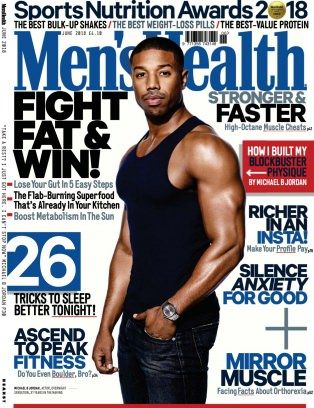
1) Write an analysis of the media language choices on the cover of Men's Health - e.g. colour scheme, typography, language, photographic codes etc.

Bold typography
medium shot and model to be posed to show it's muscle
colour-red.blue or black for text and white backrground.

2) Identify three specific aspects/conventions/important points (e.g. cover lines, colour scheme, use of text, image etc.) from each page of the CSP that you could refer to in a future exam. Explain why that particular aspect of the CSP is important - think about connotations, representations, audience pleasures, reception theory etc.

Front cover: 

Editor's Letter and contents page:

Feature - True Grit - 'The Marathon Man': 

3) Apply narrative theories to Men's Health - Todorov's equilibrium, Propp's character types, Barthes' action or enigma codes. 

propp charcater type- Vin diesel to be the hero.

barthes-
action-vin diesels in the front page with huge muscles
enigma-cover lines in the front page.

4) Read the cover lines and the Editor's Letter. Does Men's Health offer a cure for male insecurities or does it create male insecurity?

i think it creates insecurities as it shows everyone needs a to have big muscles to attract the opposite sex.

5) How does the 'Marathon Man' feature page offer an example of Steve Neale's genre theory concerning 'repetition and difference'?

This is because they are showing a old man to be in the magazine which is different and repetition is the Why they are trying to motivate us through him.

Representations

We have already covered many relevant theories in our work on Advertising and Marketing (for example, David Gauntlett's writing on Media, Gender and Identity). We now need to apply these theories and ideas to Men's Health and specifically the three pages from the Jan/Feb 2017 issue identified as our Close-Study Product.

Representations: applying theory

1) How can Gauntlett's ideas on masculinity, gender and identity be applied to the Men's Health CSP we have analysed?

Gauntlett's idea links to men's health because magazines are showing that men also have mental health which is featured in one of their cover lines which suggests that the stereotypical view of men being strong is shaken and masculinity is changing.

2) How could van Zoonen's work on feminist and gender theory be applied to Men's Health?

media reinforces sex roles which is done by showing vin diesel to be a tougher and bigger man that attracts women and shows that gym is of masculine use only.

3) How could bell hooks's work on 'corrosive masculinity' apply to Men's Health?

she agrees with judith butler on gender roles to constructed and believes the patraichy society has constructed it.

Representations: academic analysis

Read these extracts from the journal article exploring the representation of masculinity in Men's Health magazine and answer the following questions:

1) Why is Men's Health defined as a 'lifestyle magazine'?

This is because it focuses on different topics for men-excerices and fashion.

2) Why is advertising significant in helping to shape masculine identity?

This sshows what products they can use in order to look the people in the front cover.

3) The article suggests that the representation of masculinity in Men's Health is not fixed or natural and is subject to constant change. What media theorists that we have studied previously can be linked to these ideas?

david gauntlett-masculinity is in crisis and that gender roles are changing.

4) What does the article suggest Men's Health encourages its readers to be? What examples and statistics are provided to develop the idea of men as consumers?

it suggest them to be healthier and shows they will live a happy life if they avoid drinking and smoking.

5) What representations of the male body can be found in Men's Health?

They represent the male body to be a male instrument and needs to be taken care in order to live the life.

6) What does the article suggest regarding the objectification of men?

It suggests that men bodies are getting more objectified than women and are women are looking up to men. 


7) What is 'metrosexuality' and how can it be applied to Men's Health?

it means men being concerned about their p-hysical helath and fashion in terms of hwo they look.

9) What are the conclusions drawn by the article with regards to the representation of masculinity in Men's Health?

conclusions are that men are still seen to  strong but now they are being shown as objects towards women as they need to get a physique to get a girl.

10) What is your own view of the representation of masculinity in Men's Health? Is it a positive representation that encourages men to the best they can be or is it a hypermasculine, consumer-driven representation designed to undermine men's confidence and objectify their bodies?

In my view that the magazines encouraging hypermasulinity as they show that masculinity is strong and are showing how men are dominant.

Friday, June 21, 2019

magazine cover learner response


Create a new blogpost called 'Magazine cover learner response' and complete the following tasks:

1) Add your finished magazine cover as a JPEG image.


2) Type up your feedback from your teacher. If you've received this by email, you can copy and paste it across - WWW and EBIs.

Mark: 11
Grade: B

WWW: This is a good front cover that contains many elements that are appropriate for Men’s Health. The image – both camera shot and pose – is effective and feels like a Men’s Health cover shot. The language of the cover lines also feels appropriate for Men’s Health too. With a few additional elements, this could approach the professional standards required for A/A*.

EBI: Although you have most of the separate elements for a professional cover (image, cover lines etc.) the overall design finish falls short of professional standards. This is mainly in terms of the cover lines – the alignment is all over the place, the font sizes seem quite random and inconsistent and the text feels crammed in at points (e.g. ‘Bigger biceps’ at the top, ‘healthy lifestyle’ at the bottom). You are also missing a few conventions – date, price – and also it is not clear which of the cover lines links to the central image. Finally, your evaluation questions are pretty weak – I’d like to see a bit more detail and reflection on your work as these will be vital skills when acting on feedback for the real coursework next year.

3) Consider your mark against the mark scheme above. What are the strengths of your production based on the the mark scheme? Think about magazine cover conventions and the media language techniques you have used to communicate with your audience (e.g. mise-en-scene, camera shot etc.)

The mise en scene from my magazine is very effective as i  got mandeep in a position in which he looks physically strong and his costume is also very appropriate for my magazine.additionally  the medium shot is effective as it shows the character in more detail.

4) Look at the mark scheme again. What can you do to move your mark higher and, if required, move up a level?

to make sure my cover-lines are different and not the same as the old magazines from men's health to make sure that i am creating something new to communicate with my audience effectively.

5) What would be one piece of advice you would give a student about to start the same magazine cover project you have just completed?

planning is a key factor in doing anything in life and if you plan before you do this,then you are able to reach the target you set.

Monday, June 3, 2019

planning

Planning
Create a SEPARATE blogpost called 'Magazine practical task planning' and complete the following tasks:

1) Plan your main flash - this is the main cover story that links to your central image.

men's health magazine starring mandeep Gruvar who will close his arms to show his big muscles
2) Plan the image you will need for the cover - model, costume, make-up, lighting etc. At this point, simply describe the image you need to capture.

model-mandeep gruvar

costume- t shirt and jeans
no make up required

This is going to be a medium shot which will be taken with mandeep closing his arms and make his
 3) Write the cover lines and any additional text you need for your magazine cover.

are you summer ready?
v shape back
55 ways to get bigger


4) Sketch out your cover on plain A4 paper using your written planning. Take a photo of your sketch and embed it in your blogpost.


Friday, May 24, 2019

magazines final task


2) Write an evaluation of your work: have you succeeded in your brief to create a new, original edition of an existing magazine?

The magazine covers is quite similar to men's health magazine cover because in the magazine they highlight the model in the middle which is done in my cover and the font also quite similar to a men's health magazine cover as the cover lines and heading are big like they show in the magazine.


3) Put your cover alongside a couple of genuine covers of your chosen magazine. How professional is your work alongside genuine examples?

It does look professional because the way the model is positioned in the magazine is very similar to the way the men's health magazine show their model but  the cover lines of the magazine can make it look less professional.

 4) What is the strongest aspect of your work?

The picture of the model

5) What is the weakest aspect of your Photoshop magazine cover? 

The weakest point will be that there is a gap in the middle of the magazine

6) What would you do differently if you completed this assignment again?

i will make sure that i plan out my cover lines from before and plan the sketch properly before doing anything as planning will help me execute my plan properly.

Friday, May 3, 2019

Research

1) Use your lesson notes on magazine genres and conventions to view a range of potential magazine covers. Create a shortlist of three potential magazines and embed an example front cover from each one.

1.)Image result for men's health magazine cover 2.) Image result for asian bride magazine uk
3.) Image result for glamour magazine


2) Select your chosen magazine to create a new edition for and explain the thinking behind your choice.


Image result for men's health magazine cover
3) Find three different front covers for your chosen magazine and embed them in your blogpost. Analyse the fonts, colours and typical design. What is the language or writing style? How are the cover lines presented? You need to become an expert in the design and construction of this magazine and its branding.


Image result for men's health         Image result for men's health      Image result for men's health


The three different covers are very much similar with each other as they are all using the same font when they are using the title and even for the cover lines are very highlighted.The model is main feature in the magazine and is always the focus which is kept in the middle and the cover lines surround him.furthermore they make sure that the model they show is showing some type of muscle and is positioned to show its muscle.